
Top 10 In-Demand Skills for Jobs in 2026

On this page What changed since the 2024 list 1. Analytical thinking 2. AI fluency, meaning direction rather than familiarity 3. Data literacy 4. Explaining your work to someone who was not there 5. Resilience, flexibility and agility 6. Judgement under ambiguity 7. Learning velocity 8. Domain depth 9. Working across functions 10. Security and privacy instincts What to do with this list Frequently asked questions Sources This list gets rewritten every year and most versions say the same comfortable things. This one is different from the 2024 edition on purpose: roughly half of what was on that list has either become an assumption rather than a skill, or been absorbed by tools. The honest framing for 2026 is that employers are not short of people who have heard of things. They are short of people who can decide, judge and explain — 82% of Indian employers report difficulty filling roles, against 72% globally, with AI capabilities the hardest to find. The shortage is not of awareness. It is of demonstrable capability. What changed since the 2024 list Digital literacy did not stop mattering. It stopped distinguishing you. Two years ago “digital literacy” was a reasonable thing to put on a list. In 2026 it is the equivalent of listing punctuality — assumed, and slightly odd to mention. The same is true of basic reporting, which tools now do, and of “communication skills” stated generally, which is too vague for anyone to assess. What replaced them is more specific and harder to fake. That is the pattern running through the whole list. 1. Analytical thinking The World Economic Forum’s Future of Jobs Report puts this first, named as a core skill by roughly seven in ten companies. Concretely it means breaking a vague problem into parts you can actually test, and noticing which part carries the answer. It is the most durable skill on this list because it does not depend on any tool. Show it by describing a problem you reframed — where the useful work was realising the question was wrong, not answering it faster. 2. AI fluency, meaning direction rather than familiarity Roles genuinely requiring AI skills command a 62% wage premium according to PwC’s 2026 barometer. The word carrying the weight is requiring. Listing tool names earns nothing, because everyone lists them. What is scarce is the ability to direct a tool toward a real problem and then check its output critically — knowing where it tends to be confidently wrong. Show it by naming something you built with AI assistance and one place it misled you. 3. Data literacy Not building models. Reading a number and knowing whether to trust it: what the denominator was, whether the sample supports the claim, whether the average is hiding a distribution. This has become more valuable precisely because generating charts is now trivial. When anyone can produce a figure in seconds, the scarce skill is recognising when the figure is meaningless. 4. Explaining your work to someone who was not there Employers increasingly rank communication above raw technical ability when deciding between candidates, and this is the version they mean: taking something you understand deeply and making it usable by a person who has thirty seconds and a decision to make. It is testable, which is why it beats “good communication skills” as a claim. If you can write four sentences explaining a trade-off you made, you have demonstrated it. Most people cannot. 5. Resilience, flexibility and agility The WEF ranks this immediately behind analytical thinking, and it is less woolly than it sounds. It means continuing to work sensibly when the requirements change midway, the tool is deprecated, or the thing you built turns out to solve the wrong problem. Employers screen for it by asking about something that went wrong. The answer that lands is specific about what you changed, not about how positive you stayed. 6. Judgement under ambiguity Making a defensible call when the information is incomplete, and being able to say what you traded away. This is the single hardest thing to teach and the easiest to evidence, because every real project contains one. It is also the skill AI is furthest from replacing, since a model will confidently produce an answer without any sense of what it cost to choose it. 7. Learning velocity The WEF expects 39% of current skills to be transformed or outdated between 2025 and 2030. Against that rate, how fast you pick up something new matters more than the size of what you already know. This is the meta-skill on the list, and the one with the clearest evidence: a short, finished learning cycle you can describe. The mechanics of keeping skills current are covered in more depth in the half-life of skills. 8. Domain depth Knowing how one industry actually works — how lending decisions get made, why a particular kind of customer churns, what breaks in a supply chain under load. Underrated because it is unglamorous, and increasingly valuable because it is the context AI tools do not have. It is also why people who stay in one sector often out-earn stronger technologists who keep switching. 9. Working across functions Getting something done with people who do not share your assumptions, vocabulary or incentives. In practice this is most of what a job is after the first year, and almost none of what training prepares you for. Evidence it with a specific instance: a time you had to translate between two groups, or extract a real requirement from someone who described the problem wrongly at first. 10. Security and privacy instincts Not a security career — the basic reflexes. Recognising that a dataset contains personal information, that a credential does not belong in a repository, that a convenient shortcut creates an exposure. This has moved onto the list because so much work now involves pasting data into third-party tools, and the people who pause before doing that are conspicuously rare. What to do with
12 Human Resourses Functions You Must Master in 2026 (If You Don’t Want to Fall Behind)
What exactly does HR do these days, besides hiring and handling awkward complaints? A lot more than people think. In 2026, HR has become the quiet engine that keeps companies sane, teams steady, and employees actually happy to show up on Mondays. It is about building work environments that actually work. From the moment someone applies to the day they leave (and even after), HR is in the background pulling strings, fixing messes, and making sure nothing falls through the cracks. Here are the 12 human resources functions 2026 you need to master. The 12 Human Resource Functions That Matter in 2026 These are not theoretical concepts. These are the actual responsibilities that separate good HR teams from great ones. 1. Workforce Planning: Planning Today for Tomorrow’s Chaos It is not just about headcount anymore. Workforce planning in 2026 involves predictive hiring models, internal talent forecasting, and even talent mapping against industry disruptions. Smart HR teams use attrition analytics to identify flight-risk roles and prepare successors 18 to 24 months in advance. They are not waiting for someone to quit and then scrambling. They already have the next person lined up. Real example: A fintech company in Mumbai uses AI-based modeling to predict which departments might face leadership voids two years ahead. This helps them build leadership pipelines before issues even surface. Why it matters: Reactive hiring is expensive. Proactive planning saves money and keeps projects from derailing. 2. Recruitment & Talent Acquisition: Beyond Resumes and Bullet Points Sourcing candidates is no longer about LinkedIn filters or posting job description templates. Now, companies scan social behavior trends, GitHub contributions, or even open-source community involvement to find proactive talent. Global hiring platforms and behavioral assessments are catching steam, where alignment with company values gets more weight than past job titles. Some companies even look at how candidates engage in online communities to gauge collaboration skills. What works: Do not just screen for education or experience. Run micro-scenario assessments to test real-world thinking before the first interview. Give them a problem. See how they approach it. The shift: Hiring for potential and cultural fit is replacing the old “5 years of experience required” gatekeeping. 3. Onboarding That Actually Works (Not Just Orientation Slides) It is no longer about orientation slides and welcome emails that nobody reads. 2026 onboarding is designed like a first-year experience. From Day 1, new hires get role-based simulations, meet their mentors through peer-matching platforms, and start real work within the first week. All while receiving adaptive nudges through people enablement tools. Real example: A logistics firm in Pune pairs new employees with “onboarding buddies” who are one level junior to the manager. Not the manager themselves, which can feel intimidating. Someone closer to their level who remembers what being new feels like. Why this matters: Good onboarding reduces time-to-productivity from months to weeks. Bad onboarding is why 20% of new hires quit in the first 45 days. 4. Rethinking Performance Management (Stop Chasing KPIs) Instead of annual reviews that everyone dreads, high-growth companies are shifting to continuous micro-feedback. But more interestingly, some HR teams now benchmark individual output by internal impact. They measure how often a person’s work gets reused, cited, or builds momentum across departments. Did someone create a process that three other teams adopted? That is impact. What forward-thinking teams do: They use heat maps to visualize influence across project teams. Not just who completed tasks, but whose work actually moved things forward. The tool shift: Forward-thinking HRs are switching to smarter platforms like Abekus AI that track contribution depth, not just activity. Bottom line: Move beyond ratings. Start measuring what actually matters. 5. Learning Is the New Currency (But Make It Relevant) Upskilling is routine now. Contextual learning is still rare. People do not want ten courses on AI. They want the one that shows them how to automate their exact workflow. Hyper-contextual learning paths are making waves, like embedded learning in Slack, or auto-curated content served during actual work. Real example: An HR-tech firm rolled out “Just-In-Time Learning” where employees only see training prompts when they hit a blocker in real projects. Not generic courses. Targeted help when they need it. The shift: Learning is moving from scheduled training sessions to embedded, on-demand support that shows up exactly when someone needs it. 6. Career Growth That Feels Personal (Not Just a Ladder) Employees in 2026 crave movement, not always upward. Smart HR leaders are introducing career marketplaces that let employees pitch for new internal projects, switch roles for three months, or try shadowing sprints with senior leaders. Not everyone wants to be a manager. Some people want to go deeper into their craft. Others want to try something completely different for a quarter. What is working: Internal gig boards with stretch assignments are becoming more impactful than traditional promotions. People feel like they are growing even when their title stays the same. The mindset shift: Career growth is not a ladder anymore. It is a jungle gym. 7. Pay, Perks & What Actually Retains Talent Money talks, but so does fairness. The smart move in compensation? Pay transparency. Teams now run pay audits by department and gender, publishing salary bands internally. No more guessing. No more resentment when someone discovers they are underpaid. Companies also let staff choose from multiple benefit plans, including parental support, therapy stipends, or learning credits. One-size-fits-all benefits are out. What is new: “Total Rewards Dashboards” where employees see the full value they receive, not just their salary. Base pay, equity, benefits, perks, learning budget. Everything in one place. Why it works: People stay when they feel fairly compensated and when compensation is transparent enough to trust. 8. Employee Relations That Are Proactive (Not Reactive) Conflict is not a failure. Silence is. HR in 2026 tracks sentiment with passive analytics. These include language shifts in emails, drop in meeting participation, or even recurring late logins. These signals help flag potential burnout, team friction, or low trust before they explode.
Top 10 Hiring Platforms for Your HR Department
Finding good people is hard. Finding the right tools to help you find those people? That should not be.The hiring platform market is crowded. Too many options, too many features you will never use, and pricing that makes no sense until you are already three months in. Some platforms promise everything and deliver half. Others work great but cost a fortune. This guide cuts through the noise. We looked at what actually matters: ease of use, real features that help you hire faster, and whether the platform justifies its price tag. Here are the 10 hiring platforms worth your time in 2026. Introduction to Modern Hiring Platforms Before we get into the list, let us talk about what separates useful platforms from expensive distractions. It should save you time, not create more work. If you need a manual to figure out how to post a job, the platform is too complicated. It should help you find people, not just collect resumes. A good platform surfaces the right candidates instead of burying you in applications. Pricing should make sense. No surprise fees. No “contact us for pricing” games. You should know what you are paying for. It should integrate with what you already use. If it cannot talk to your ATS or calendar, it will create more problems than it solves.With that in mind, here are the platforms that get it right. 1.Abekus AI What it does: AI-powered matching between job requirements and candidate skills. Why It WorksAbekus AI is not trying to be everything. It focuses on one thing: matching the right people to the right roles using artificial intelligence. The platform analyzes what you actually need for a role and compares it to candidate skills, experience, and work history. No more reading 200 resumes hoping to find someone qualified. The system does that work for you and surfaces the best matches. What makes it different is the skills verification system that tracks candidate capabilities and learning progress. You get insight into what someone knows and how they are growing, not just what they claim on a resume. The interface is clean. No clutter. No endless menus. You post a job, the system finds matches, and you start conversations. That is it. Standout Features Pricing: Free Best for: Companies that want smarter matching without the complexity of enterprise platforms. 2.LinkedIn Talent Solutions What it does: Taps into LinkedIn’s massive professional network for recruiting. Why People Use ItLinkedIn has 900 million users. If the person you need exists, they are probably on LinkedIn. LinkedIn Talent Solutions gives you tools to find both active job seekers and people who are not looking but might be interested. LinkedIn Recruiter lets you search by skills, location, company, and a dozen other filters. LinkedIn Jobs puts your posting in front of relevant people. The downside? It can get expensive fast, especially if you are hiring volume. But for hard-to-fill roles or specialized positions, the reach is unmatched. What You Get Pricing: Free basic version, paid plans for Recruiter accessBest for: Recruiting passive candidates or filling specialized roles. 3.Indeed What it does: Massive job board with application management tools. Why It Still Matters Indeed is the biggest job site in the world. That means visibility. When you post a job on Indeed, people see it. The platform is straightforward. Post your job, set your budget for sponsored listings if you want more visibility, and applications come in. You can filter, message candidates, and manage everything from one dashboard. Indeed Resume gives you access to millions of resumes you can search through, which is useful when you need to proactively find people instead of waiting for applications. The challenge is volume. Popular jobs can get hundreds of applications in days. You need a good screening process or you will drown. Key Features Pricing: Free job posting, paid options for sponsorship and resume access Best for: High-volume hiring and roles that do not require specialized skills. 4.Glassdoor What it does: Job listings combined with company reviews and salary data. The Transparency Advantage Glassdoor flipped the script by letting employees review companies publicly. Candidates now research your company before they apply. They read reviews from current and former employees. They check salary ranges. They see interview questions other candidates were asked. This transparency works both ways. Bad reviews can hurt your ability to attract talent. Good reviews and a strong employer brand can make hiring significantly easier. As a recruiting tool, Glassdoor works best when you are already managing your employer brand there. If your company has decent reviews and you engage with feedback, job postings perform well. What Makes It Different Pricing: Free basic job posting, paid plans for enhanced features and branding tools Best for: Companies focused on employer brand and transparency. 5.ZipRecruiter What it does: AI matching with multi-platform job distribution. The Distribution Advantage ZipRecruiter posts your job to 100+ sites automatically. One submission, massive reach. For small teams that do not have time to post everywhere manually, this is huge. The AI matching sends your job to candidates whose profiles fit what you need. You get notifications when someone is a strong match, and you can invite them to apply with one click. The platform learns from your actions. If you pass on certain types of candidates consistently, it stops showing you similar profiles. If you interview people with specific backgrounds, it finds more like them. Core Features Pricing: Paid plans only (starts around $249/month) Best for: Small to mid-size companies that need wide distribution without manual work. 6.JobVite What it does: Full-cycle recruiting from sourcing to hiring. The Complete Package Jobvite tries to handle everything: sourcing, applicant tracking, interviewing, analytics, and onboarding. For companies that want one platform for the entire hiring process, it delivers. The referral system is strong. Employee referrals are still one of the best sources of quality hires, and Jobvite makes it easy to manage and incentivize referrals. Video interviewing is built in, which became essential during remote work
How the STAR Method for Interviews Helps You Find the Right People
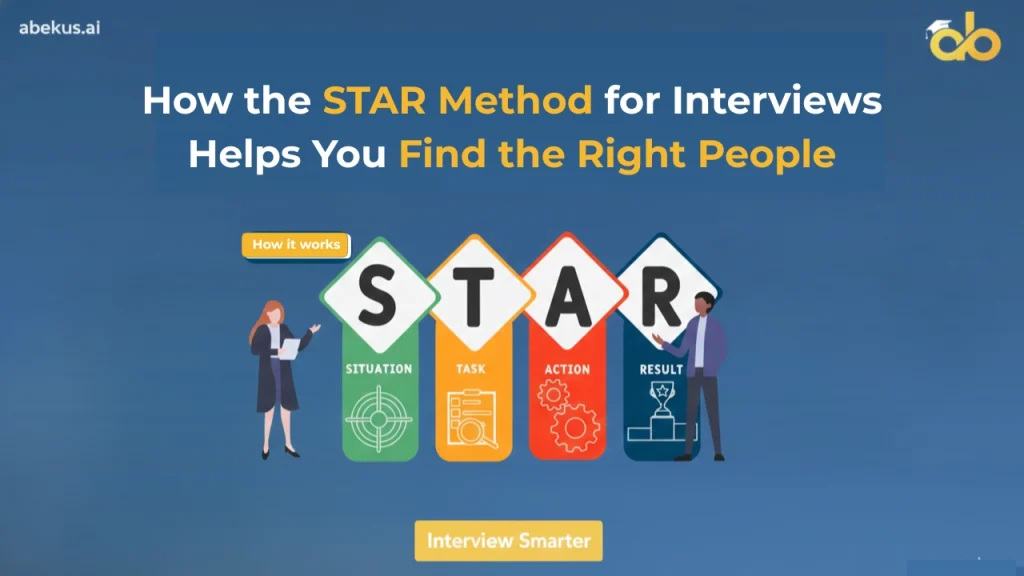
Interviews used to be simple conversations. Now they carry the weight of entire hiring decisions. Every question matters. Every answer gets analyzed. The problem? Most candidates sound impressive until you actually hire them. They know what to say. They have practiced their lines. But can they do the work when things get messy? That is where the STAR method for interviews changes everything. Companies like Amazon built their hiring around it because it works. It cuts through the polished answers and shows you how someone actually handles pressure, solves problems, and delivers results. Here is what makes it different and why your team should be using it. What Is the STAR Method for Interviews? The STAR method for interviews is not complicated. It is just structured. Instead of letting candidates ramble or give you the same rehearsed stories, you ask them to break down real experiences using four parts: S = Situation – What was happening? Give me the context. T = Task – What were you responsible for? What needed to get done? A = Action – What did you actually do? Not what the team did. What YOU did. R = Result – How did it turn out? Numbers help here. This structure forces people to be specific. You are not hearing vague claims like “I work well under pressure.” You are hearing “When our product launch got moved up by two weeks, I reorganized the sprint, cut three non-essential features, and we shipped on time with zero bugs in production.” See the difference? One sounds like everyone. The other shows you exactly how this person thinks and works. Why Hiring Teams Are Switching to the STAR Method Unstructured interviews are a gamble. You end up hiring the person who interviews well, not the person who does the work well. We have all made that mistake. Someone walks in, tells a good story, makes you laugh, and suddenly you are convinced they are perfect. Then three months later, you are wondering what happened. The STAR method for interviewing removes that risk. According to a study by DDI, companies using behavioral interviewing techniques like STAR saw a 25% increase in hiring accuracy. Even better, they experienced up to 40% lower turnover in the first year. Think about what that means. Fewer bad hires. Less time wasted on re-recruiting. Teams that actually stick around and deliver. Those numbers are not abstract. They represent real consequences when you get hiring wrong: burned budgets, frustrated managers, projects that fall apart, and the exhausting cycle of hiring the same role twice in six months. Why the STAR Method for Interviewing Actually Works The STAR method for answering interview questions is built on behavioral consistency. Fancy term for a simple idea: how someone acted in the past tells you how they will act in the future. When you ask someone to describe a real situation, you strip away the fluff. You are not hearing “I am great at teamwork.” You are hearing “In my last role, I worked with a cross-functional team of eight people to rebuild our onboarding process. I handled the technical side while coordinating with design and support. We cut onboarding time from five days to two, and new user activation jumped 30%.” That answer tells you everything. You see their role. You see their impact. You can compare it to other candidates fairly. Here is what the STAR method for interviews gives you that regular questions do not: Context and depth. You understand the full story, not just the highlight reel. Measurable outcomes. You see actual results, not just effort. Fair comparison. Every candidate answers using the same structure, so you can evaluate them equally. Bias reduction. You are judging actions and results, not personality or polish. This is why companies using the STAR method for interview questions hire better. They are evaluating the right things. How to Use the STAR Method for Interview Questions You do not need special training to use this method. But you do need to prepare. Here is how to do it right. 1. Write Better Questions Start every behavioral question with one of these prompts: “Tell me about a time when…” “Describe a situation where you had to…” “Give me an example of…” Do not ask yes-or-no questions. Do not ask what they “would do” in some hypothetical scenario. You want real stories about things that actually happened. Good STAR interview questions: Tell me about a time you missed a deadline. What happened? Describe a situation where you had to deal with a difficult coworker. Give me an example of a project you led that did not go as planned. Walk me through a time you had to learn something new quickly. These questions force candidates to dig into real experiences, not hypotheticals. 2. Listen for All Four Parts Not every candidate knows the STAR structure. Some will skip parts. Your job is to catch that. If someone describes the situation but skips straight to the result, ask: “What was your specific role in fixing that?” “What actions did YOU take, not the team?” “What was different about your approach?” These follow-ups separate the people who actually did the work from the people who were just in the room when it happened. 3. Match Questions to the Role Before the interview, decide what matters most for this job. Problem-solving? Communication? Leadership? Conflict resolution? Then design your STAR questions around those qualities. If you are hiring for customer service, ask about handling angry customers. If you are hiring for engineering, ask about debugging complex issues under tight deadlines. Every question should map to a skill or behavior the role requires. 4. Push for Numbers Vague answers like “I improved efficiency” do not tell you much. Ask follow-ups: “How much time did that save?” “What was the measurable outcome?” “Did your manager or client give feedback on it?” Quantified results help you separate strong performers from people who just show up and do average work.
5 Best Interview Questions to Ask Candidates
Most interview questions are useless. There, we said it. Ask someone where they see themselves in five years and watch them recite the same answer they gave to the last three companies. Ask about their greatest weakness and you will hear “I work too hard” for the millionth time. Hiring is not about checking boxes. It is about understanding how someone thinks when things get messy, how they treat people when nobody is watching, and whether they can actually do the work without falling apart. Good interviews feel less like interrogations and more like honest conversations. The kind where you learn something surprising. Where the candidate forgets to perform for a second and just talks like a real person. This guide walks through five questions that cut through the rehearsed answers. Questions that make people pause, think, and show you who they really are. Why Traditional Interview Questions Miss the Point Here is the problem with most interviews: candidates know what you are going to ask before they walk in the door. They have practiced their answers. They have Googled “top interview questions” and memorized responses. You ask predictable questions, they give polished answers, and you learn almost nothing. The “Tell Me About Your Strengths” Trap Ask about strengths and you get a greatest hits album. “I’m detail-oriented. I’m a team player. I thrive under pressure.” Cool. So does everyone else who wants this job. These answers do not tell you how someone actually works. Do they crumble when a project goes sideways? Do they throw teammates under the bus when things get tense? Can they admit when they are wrong? You cannot learn that from a rehearsed strength. Hypotheticals Do Not Predict Real Behavior “What would you do if a deadline was moved up suddenly?” People can spin beautiful stories about what they would theoretically do. But theory and reality are different animals. Someone might say they would stay calm and re-prioritize. In real life, they might panic, blame others, or just shut down. Past behavior beats future promises every single time. What Actually Makes a Question Worth Asking The best interview questions share a few things: They ask about real stuff that already happened, not imaginary scenarios. They make people reflect on themselves, which most of us avoid doing. They create answers that vary wildly between candidates. If everyone sounds the same, your question is not working. They predict how someone will actually behave when hired, not just how well they interview. Now, let us get into the five questions that do this. Question 1: Tell Me About a Decision You Made at Work That Did Not Go as Planned Start here. This question cuts straight to how someone handles failure, pressure, and their own mistakes. Why This Works Everyone screws up. That is not the interesting part. What matters is what happens next. Some people own it immediately. Others point fingers. Some freeze. Some fix it quietly. Their answer tells you which type they are. You also learn about self-awareness. Can they look at a tough moment honestly, or do they rewrite history to make themselves look better? The people who can break down what went wrong without getting defensive are usually the ones you want on your team. What You Are Really Listening For The good stuff: The red flags: Questions to Ask Next “If you could go back, what would you do differently?” “How did your manager react when this happened?” “Have you used that lesson since then? What happened?” These follow-ups separate the people who actually learned from the ones who are just good at storytelling. Question 2: If Your Previous Manager Were Asked What Your Strongest Quality Was, What Would They Say? This question flips the script. Instead of asking candidates to brag about themselves, you are asking them to report what someone else noticed about them. Why This Works It forces external perspective. Most people are either too hard on themselves or too easy. Asking what their manager saw forces them to step outside their own head. It also reveals whether they were paying attention. Did they notice when their manager complimented their work? Do they remember feedback, or did it go in one ear and out the other? And here is the sneaky part: their answer tells you if they actually made an impact. Vague answers like “probably my work ethic” usually mean they are guessing. Specific answers like “she told me I was the only one who could calm down angry clients” mean something real happened. What You Are Listening For Good signs: Bad signs: Follow-Up Questions “Can you give me the specific moment your manager said that?” “How did that quality help your team hit goals?” “Did you get any formal recognition for it?” The details matter here. Specifics mean truth. Vagueness usually means they are making it up. Question 3: What Kind of Feedback Has Stuck With You Over the Years? This question digs into what shaped them. The feedback people remember tells you what they value, who they listen to, and whether they actually grow. Why This Works The criticism you remember matters more than the praise. If someone only recalls being told they are amazing, that is a problem. It means they either tune out constructive feedback or nobody trusted them enough to give it. The best candidates remember both. The manager who pushed them to speak up more. The peer who pointed out they interrupted people in meetings. The mentor who told them they were thinking too small. Feedback that sticks changes behavior. If they can tell you what stuck and how it changed them, you are talking to someone who evolves. What to Listen For Good indicators: Red flags: Follow-Up Questions “How did that feedback change how you work?” “Was there feedback you resisted at first but later realized was right?” “What kind of feedback helps you grow the most?” These follow-ups reveal whether someone just collects feedback or actually uses it. Question
9 Box Grid Made Simple: Complete Guide to Talent Management in 2026
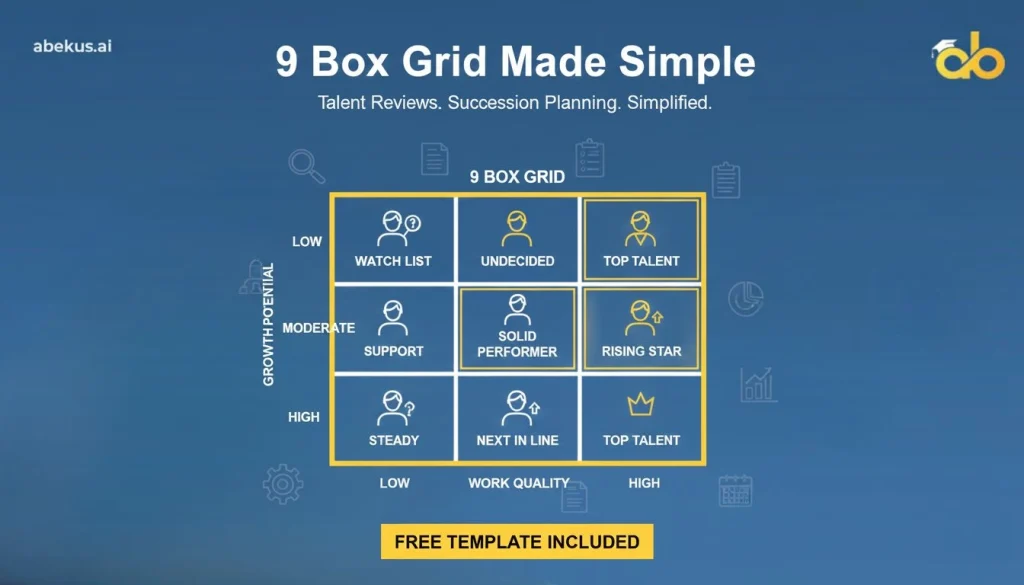
The 9 Box Grid is a simple yet powerful tool used in talent reviews and succession planning. It helps HR teams and managers group employees based on performance and potential, giving you clear visibility into your workforce strengths and development opportunities. But here is the reality: many organizations still find it confusing or too theory-heavy. This comprehensive guide breaks down the 9 box talent matrix in a practical way, so you can actually use it during real conversations and reviews. Plus, we have included implementation strategies and actionable next steps for each box. Whether you are in HR or leading a team, this is a smart way to get a clearer picture of where your people stand and what comes next for their development. What Is the 9 Box Grid? The 9 Box Grid is a strategic HR tool that creates a visual map of your talent. Think of it as a simple chart, but one with powerful implications for your workforce planning. The Basic Structure HR teams across the globe use this grid to evaluate and categorize employees based on two critical dimensions: Performance (horizontal axis): How well someone executes their current rolePotential (vertical axis): Their capacity for growth and future leadership This creates a 3×3 matrix with nine distinct boxes. Each box represents a unique combination of current performance and future potential, helping you make informed decisions about development, promotion, and succession planning. Primary Uses of the 9 Box Grid Organizations leverage this talent management tool for several strategic purposes: The 9 box performance matrix gives you a snapshot of your entire team’s capability landscape, making talent decisions more objective and strategic. Understanding the Two Core Axes of the 9 Box Grid Before we explore the nine boxes themselves, it is essential to understand what each axis truly measures and how to evaluate employees on these dimensions. Axis 1: Current Performance (Work Quality) This measures how effectively someone handles their present responsibilities. It answers the question: “How well is this person doing in their current role right now?” Performance Rating Levels Low Performance: Inconsistent delivery, frequently misses expectations, requires significant management oversight, or struggles with core responsibilities. Moderate Performance: Steady and dependable contributor, meets expectations consistently, delivers reliable results, but has room for improvement in quality or efficiency. High Performance: Consistently exceeds expectations, delivers exceptional results, requires minimal oversight, and often serves as a benchmark for others. How to Measure Performance Accurately Use multiple data sources to ensure objectivity: The key is to base performance ratings on observable facts and documented evidence, not subjective impressions or recent events alone. Axis 2: Future Potential (Growth Capacity) This evaluates how ready and capable someone is to take on greater responsibilities. It answers: “How far can this person grow within the organization?” What Potential Really Means Potential is not just about ambition or energy. It encompasses several critical factors: Learning agility: How quickly they absorb new concepts and apply themAdaptability: Their comfort level with change and uncertaintyInitiative and ownership: Willingness to take on challenges without promptingLeadership qualities: Ability to influence, guide, and inspire othersStrategic thinking: Capacity to see beyond immediate tasks to bigger pictureEmotional intelligence: Self-awareness and ability to work effectively with others Potential Rating Levels Low Potential: Content in current role, limited interest in advancement, struggles with new challenges, or lacks capacity for higher-level responsibilities. Moderate Potential: Shows promise for growth, willing to learn, can handle increased responsibility with proper support and development. High Potential: Demonstrates clear readiness for advancement, quickly masters new skills, seeks challenges, and shows strong leadership indicators. How to Assess Potential Fairly Evaluate potential through multiple lenses: Remember that potential can develop over time. Someone with moderate potential today might become high potential with the right experiences and development. How to Build Your 9 Box Grid: 4 Strategic Steps Creating an effective 9 box talent grid requires systematic evaluation and thoughtful placement. Here is the proven process used by successful HR teams. Step 1: Establish Your Rating System Before you start evaluating anyone, create clear, consistent standards that everyone understands. Choose Your Rating Scale Option A: Simple 3-Point Scale (Recommended for most teams) Option B: Detailed 5-Point Scale (For larger organizations) Define Each Rating Level Clearly Create written descriptions that remove ambiguity. Here is an example for a 3-point scale: Rating Performance Definition Potential Definition 1 (Low) Consistently below expectations, requires improvement plan Limited capacity or interest for growth beyond current role 2 (Moderate) Meets expectations reliably, solid contributor Can grow with proper development and support 3 (High) Consistently exceeds expectations, top performer Ready for advancement, shows clear leadership qualities Use Recent, Relevant Data Base ratings on: Step 2: Conduct Thorough Employee Reviews This is where objectivity and fairness become critical. Gather Multiple Perspectives Manager input: Primary evaluator with daily visibilitySelf-assessment: Employee’s perspective on their performance and aspirationsPeer feedback: Insights from colleagues who work directly with the personCross-functional input: Feedback from other departments when relevantHistorical performance data: Trends over time, not just recent performance Reduce Bias Through Structure Common biases to actively avoid: Recency bias: Overweighting recent events while ignoring overall patternsHalo effect: Letting one strong trait influence all ratingsSimilarity bias: Rating people higher because they remind you of yourselfLeniency or strictness bias: Being consistently too easy or too hardComparison bias: Rating against other people instead of against standards Use calibration sessions where multiple managers review ratings together to ensure consistency across the organization. Step 3: Place Employees into the Grid Now comes the mapping process. Take each person’s two ratings (performance and potential) and place them in the corresponding box. The 9 Box Grid Layout Here is what your completed grid structure looks like: Performance →Potential ↓ Low Performance Moderate Performance High Performance High Potential Box 3: Rough Diamond Box 6: Rising Star Box 9: Top Talent Moderate Potential Box 2: Inconsistent Player Box 5: Core Player Box 8: High Professional Low Potential Box 1: Underperformer Box 4: Solid Citizen Box 7: Trusted Professional Visual Representation Each employee receives one placement based on their
Top Recruitment Messaging Mistakes That Drive Candidates Away (And How to Fix Them)
In the age of LinkedIn inbox overload and instant judgments, the first message a recruiter sends can either open a door or close it for good. A poorly timed or impersonal message can quickly turn a potential candidate into a permanent pass, and many companies do not realize that weak recruiter messages seriously damage how talent views their brand The numbers tell the story: 43% of candidates do not always open recruiter emails. But text messages work better. Companies using SMS are four times more likely to get a reply within two minutes and report a 48% improvement in candidate experience. When competition for talent is already fierce, recruitment messaging mistakes can quietly sabotage your entire hiring strategy. This guide outlines the most common pitfalls in recruitment communication and, more importantly, how to fix recruitment messaging to connect better, sound more human, and ultimately win top talent. 1. What Is Recruitment Messaging? Recruitment messaging refers to all written communication used to reach out to candidates during the hiring process. It is your digital first handshake, and it sets the tone for everything that follows. Types of Recruitment MessagesEffective recruitment communication spans multiple channels:Email outreach : Traditional but still effective when done right Why Recruitment Messaging Matters More Than Ever Today’s professionals are selective. They know their value, and they notice lazy outreach. The best candidates will not just skim a message. They will analyze its intent, tone, and relevance. If your recruitment outreach feels too formal, too vague, or too copy-paste, it is likely to be ignored. Effective messaging respects time and shows clarity. It communicates what candidates actually care about: 4 Critical Recruitment Messaging Mistakes (And How to Fix Them) Even experienced recruiters fall into these traps. Here is how to identify and correct the most damaging recruitment outreach errors. Mistake #1: Sending Generic, Copy-Paste Messages This is the most common, and perhaps most damaging, of all recruitment messaging mistakes. Recruiters under time pressure often blast a generic message to 50 people hoping someone replies.Here is the truth: Candidates can spot a copy-paste job in two seconds. Red Flag Phrases to EliminateThese overused phrases have lost all meaning: None of these explain why the candidate is a great fit. They do not reference experience, projects, or even job titles. Why This Mistake Costs You Top TalentHigh-performing professionals, especially in tech or senior roles, receive dozens of recruiter messages monthly. If one message sounds like it could have been written to anyone, they will assume the company did not make an effort and move on. How to Fix Generic MessagingPersonalize every message: Reference specific work or skills. Mention their GitHub contributions, a recent blog post, or leadership at a local event.Keep it short and transparent: Under 150 words is ideal.Highlight what is in it for them: Be clear about the opportunity without overselling. Example: Before vs. AfterGeneric (Ignore-worthy): “Hi, we came across your profile and thought you would be a great fit for an engineering role at our company. We are a fast-growing startup with great culture. Let me know if you are interested!” ✅ Personalized (Response-worthy): “Hi Priya, I read your ReactJS article on Medium. Great insights on state management. We are hiring a lead front-end engineer to mentor a team migrating from Vue to React. The role is hybrid (Bangalore), pays ₹35-45L, and reports directly to our CTO. Could we talk next week?” This message respects her time and shows real interest in her work. Mistake #2: Focusing on Company, Not the Candidate Many outreach messages spend too much space talking about how wonderful the company is. They list awards, investors, office locations, and benefits, all before mentioning what the job actually entails. Candidates do not care if the company doubled revenue last quarter if the message does not tell them what role they will play, what impact they will make, and how this fits their career path. How to Fix Company-Centric MessagingFlip the language: Lead with role responsibilities, team structure, and what the first 90 days look like. Include real highlights: Salary range, work style, tools used, location flexibility, and growth opportunities.This approach shows you respect their time and offer clarity from the start, which directly increases your response rate. Mistake #3: Poor Timing and Message Fatigue Timing matters more than most recruiters realize. Sending messages during holidays, on weekends, or after 10 PM local time makes outreach feel automated and poorly considered. The Follow-Up TrapCandidates get tired of repetitive outreach. They ignore the first message. Then a week later, they receive: “Just checking in. Any thoughts?” This does not add value. It simply adds pressure. Too many follow-ups without substance create fatigue and lower trust. Optimal Timing for Recruitment MessagesBest days: Tuesday, Wednesday, ThursdayBest times: 10 AM to 2 PM (candidate’s local time)Worst times: Weekends, late nights, holidays How to Fix Timing and Follow-Up IssuesUse scheduling tools: Send messages during typical work hours in the candidate’s timezone.Limit follow-ups: Maximum 1 to 2 well-spaced, value-added replies.Add new information: Each follow-up should offer something new, such as additional role details, team updates, or relevant company news.Know when to stop: If there is still no reply after two thoughtful follow-ups, send a polite closing message and move on. Example: Value-Added Follow-UpPressure-Based: “Just following up on my last message. Would love to connect!” ✅ Value-Added: “Hi Priya, quick update. We just opened a second lead engineer role focused on mobile. Given your React Native experience, thought this might be an even better fit. Happy to share details if interested.” Remember: Respect earns replies. Pressure earns silence. Mistake #4: Ignoring Tone and Formatting A message can say all the right things and still be ignored because of how it is said. Tone and formatting affect readability more than most recruiters realize. Formatting Mistakes That Kill Response Rates Many messages are poorly structured with giant blocks of text, no spacing, and technical jargon everywhere. Even if the job is great, poor structure causes immediate drop-off. Example of poor formatting: “Hi I
Employee Engagement: What It Is and How to Actually Improve it

In today’s workplace, how employees feel about their work is no longer a soft metric—it’s a business performance indicator. Employee engagement isn’t just job satisfaction; it’s the emotional connection people have with their work, their team, and the organization. When people feel connected and valued, everything changes—performance, loyalty, innovation, and retention. In this guide, we break down what employee engagement really means, why it matters, and the most effective ways companies can improve it. What is Employee Engagement? Employee engagement is the emotional connection people feel toward their work and workplace. It shows up in their attitude, energy, and how much they care about what they do—not just what they’re told to do. Engaged employees don’t just clock in and out. They participate, contribute ideas, and genuinely care about outcomes. This emotional investment transforms ordinary teams into high-performing ones. Why Employee Engagement Matters: The Business Impact When people genuinely care about their work, it shows up in the numbers. From how long employees stay to how often they speak up with better ways of working, staff engagement has a measurable impact on nearly every part of a company’s success.. Proven Benefits of High Employee Engagement Productivity & Performance: Companies with high staff engagement report up to 21% higher productivity Innovation flows faster when employees feel valued—organizations see double the innovation output compared to disengaged workplaces Retention & Loyalty: Teams with stronger involvement have 59% less turnover, especially in high-pressure environments Managers who have weekly conversations with their teams double the chances of team loyalty Workplace Culture & Safety: A sense of connection and trust leads to 41% lower absenteeism Workplaces with stronger emotional commitment see 70% fewer safety incidents Strong engagement is not about perks—it’s about making people feel seen, heard, and connected. That doesn’t just improve moods; it changes results. Who Is Responsible for Employee Engagement? Employee engagement doesn’t sit with HR alone—it’s a shared responsibility across every level of your organization. Leadership’s Role in Driving Engagement Leadership sets the tone by what they prioritize, how they show up, and the kind of culture they support. Their actions speak louder than strategy decks or company-wide emails. Leaders who model transparency, vulnerability, and consistent communication create environments where engagement in the workplace can flourish. Why Managers Are the Key to Employee Connectivity The real spark often comes from managers. They’re the ones in daily contact, giving feedback, offering clarity, and setting the pace. A present, thoughtful manager can strengthen employee connectivity faster than any formal program. Effective managers: Have regular one-on-ones with their team members Provide clear, timely feedback Remove obstacles that block productivity Celebrate wins, both big and small The Employee’s Part in Engagement Employees themselves also play a part. Their energy, honesty, and willingness to contribute shape how the team feels. But without strong guidance, even the most committed employee can feel adrift. Engaged employees take initiative, communicate openly, and support their colleagues—but they need the right environment to do so. 4 Key Drivers of Employee Engagement What keeps people connected to their work isn’t a ping-pong table or pizza Fridays. It’s the everyday experience of how they’re treated, what they’re working on, and who they’re working with. 1. Meaningful Work That Matters People want to know their time counts. When they understand how their tasks contribute to something bigger, they show up with purpose—not just out of habit. 2. Growth Opportunities and Career Development Stagnation drains energy. Whether it’s learning something new or stepping into new responsibilities, the chance to grow gives people a reason to stay curious and committed. 3. Recognition and Appreciation Effort without acknowledgment feels invisible. A quick “you did well” from the right person can stick longer than a yearly award. It reminds people they matter. 4. Belonging and Workplace Connection Workplaces aren’t machines—they’re communities. When someone feels like they fit in and their voice carries weight, they’re more likely to give their best without holding back. 5 Innovative Employee Engagement Strategies That Work Traditional perks alone don’t hold people anymore. What really keeps teams connected is how they’re treated day to day. The most effective engagement practices are often simple, people-first changes that show respect, trust, and attention.. 1. Rethink Work Arrangements for Flexibility Allowing people to choose how and where they work—be it part-time hours, remote days, or compressed weeks—shows trust and respect for personal rhythms. This directly improves how people show up. 2. Build Mentorship Into the Everyday Experience Pairing employees with mentors beyond their immediate team helps them grow faster. It opens up fresh conversations, builds confidence, and creates a stronger sense of connection beyond job titles. 3. Encourage Employee-Led Resource Groups Support networks built around shared interests or experiences—like women in tech, mental health circles, or book clubs—help people connect on a personal level. These spaces often lead to better collaboration at work. 4. Turn Feedback Into a Regular Habit Short, regular check-ins between managers and their team members beat formal reviews. When feedback flows naturally, people feel heard and know where they stand. 5. Recognize Small Wins Consistently Consistent appreciation, even for routine contributions, keeps people invested. A quick shoutout in a team meeting or a note from a peer can go further than a yearly award. Common Employee Engagement Pitfalls to Avoid Even well-meaning companies sometimes miss the mark. When employee engagement strategies feel forced or overbuilt, they lose trust. Keeping it real, simple, and consistent is what keeps teams tuned in over time.. Don’t build programs people can’t relate to Big ideas with zero follow-through confuse teams. Keep employee engagement strategies grounded in daily work, not slide decks. Stop treating surveys as the final answer Surveys are just a starting point. What happens after the conversations and the changes, is what actually builds trust. Avoid one-size-fits-all plans Every team has its own rhythm. Team engagement strategies should leave room for personal touches, not just company-wide campaigns. Don’t rely only on managers While managers are key, peer support, senior leadership, and shared spaces also shape
AI/ML Hiring in India: Why Demand Is Outrunning Supply
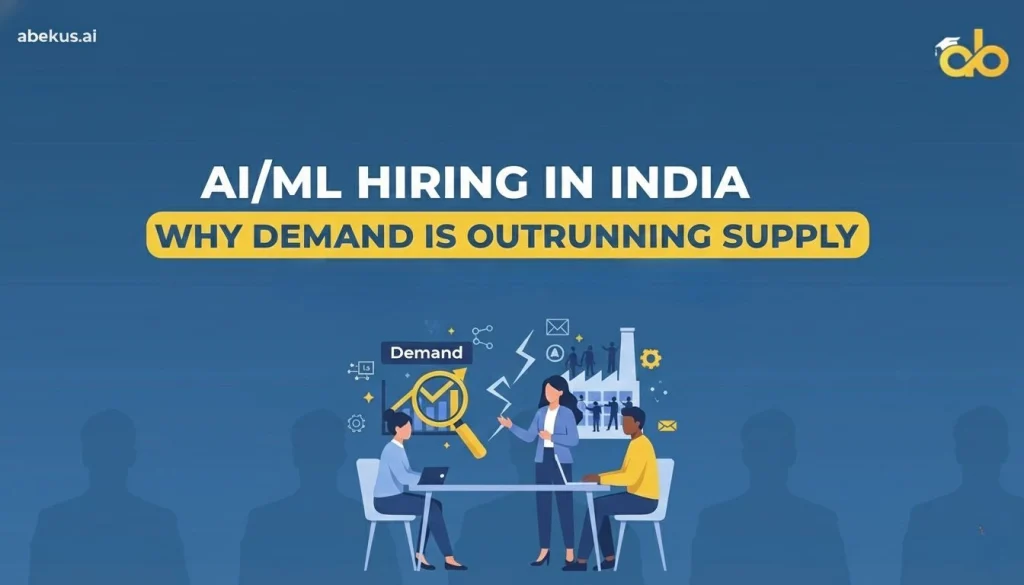
Artificial Intelligence (AI) and Machine Learning (ML) are no longer futuristic buzzwords, they are the engines driving India’s digital economy. From banks and healthcare firms to e-commerce and IT giants, organizations are embedding AI into their core operations. Check about more about Artificial Intelligence Hiring on Abekus.ai. But here’s the problem: demand is skyrocketing, while supply is crawling. Industry estimates show that India will need over 1.25 million AI/ML professionals by 2027, up from just 600,000 in 2022. Yet, fewer than half of graduates entering the job market today are employable in AI-related roles. For HR and recruitment leaders, this talent crunch is more than a headache, it’s a strategic challenge. Without the right AI/ML talent, innovation slows, projects stall, and businesses lose their competitive edge. The AI/ML Hiring Landscape in 2025 This imbalance is widening the gap between what companies need and what the talent pool offers. Why Is Demand Surging? 1. Generative AI Adoption Tools like ChatGPT, Copilot, and domain-specific AI applications are creating entirely new job categories. Companies want AI engineers, prompt engineers, and AI ethicists, roles that didn’t exist five years ago. 2. Data Explosion Every industry is collecting vast amounts of data. Companies need data scientists and ML engineers to turn data into insights. 3. Competitive Pressure Firms that fail to embed AI risk falling behind. The “AI arms race” is making AI hiring a boardroom priority, not just an HR concern. 4. Cross-Industry Demand It’s not just IT companies, banks, telecom, healthcare, and manufacturing all want AI/ML talent, further stretching the supply. Why Is Supply Struggling? 1. Outdated Education Models Universities focus on theoretical statistics but lack training in deep learning, NLP, or real-world AI projects. 2. Limited Practical Exposure Few students get to work with AI frameworks (TensorFlow, PyTorch) or handle large-scale datasets during their studies. 3. Brain Drain Top AI talent leaves India for Silicon Valley, Europe, or Singapore due to better salaries and R&D opportunities. 4. Uneven Access to Learning Only students from Tier-I colleges or urban centers often get exposure to advanced AI coursework. 5. Fast Tech Evolution AI evolves so quickly that skills learned in 2020 are already outdated by 2025. The Business Impact of the AI/ML Talent Gap How HR Leaders Are Responding How AI-Assisted Recruitment Helps in AI/ML Hiring Recruiting AI talent with traditional methods is like fishing with a blindfold, you waste time and miss the best catch. AI-assisted recruitment platforms solve this by: Case Study: Hiring AI Talent with AI A Bangalore-based fintech company needed to scale its fraud detection team by hiring 20 machine learning engineers within 90 days. The Challenge The AI-Assisted Recruitment Approach The firm adopted an AI-powered recruitment platform that allowed them to: The Results Key Takeaway By integrating AI-assisted recruitment, the fintech firm not only met its hiring targets faster but also improved quality of hire and retention. This demonstrated that AI is not just a tool—it’s a competitive advantage in winning the AI/ML talent war. Roadmap for HR Leaders (2025–2030) Conclusion: Winning the AI Talent War India’s future in AI depends not just on producing graduates but on producing job-ready AI professionals. For HR leaders, the challenge is clear: close the AI/ML skill gap before it slows innovation. The solution lies in skills-based hiring, continuous learning, and AI-assisted recruitment. At Abekus.ai, we help companies hire smarter, faster, and fairer, turning the AI talent shortage into a competitive advantage. Source of the Information NASSCOM FutureSkills: https://futureskillsprime.in World Economic Forum (India Jobs Outlook): https://www.weforum.org/reports/future-of-jobs-report-2025 Mercer Mettl India Graduate Skill Index: https://mettl.com Wheebox India Skills Report 2025: https://wheebox.com ETCISO Cybersecurity Skills Gap Report: https://ciso.economictimes.indiatimes.com Deloitte & NASSCOM AI Talent Report: https://www2.deloitte.com/in
Recruitment Challenges and AI-Assisted Solutions – India’s Tech Hiring Paradox 2026
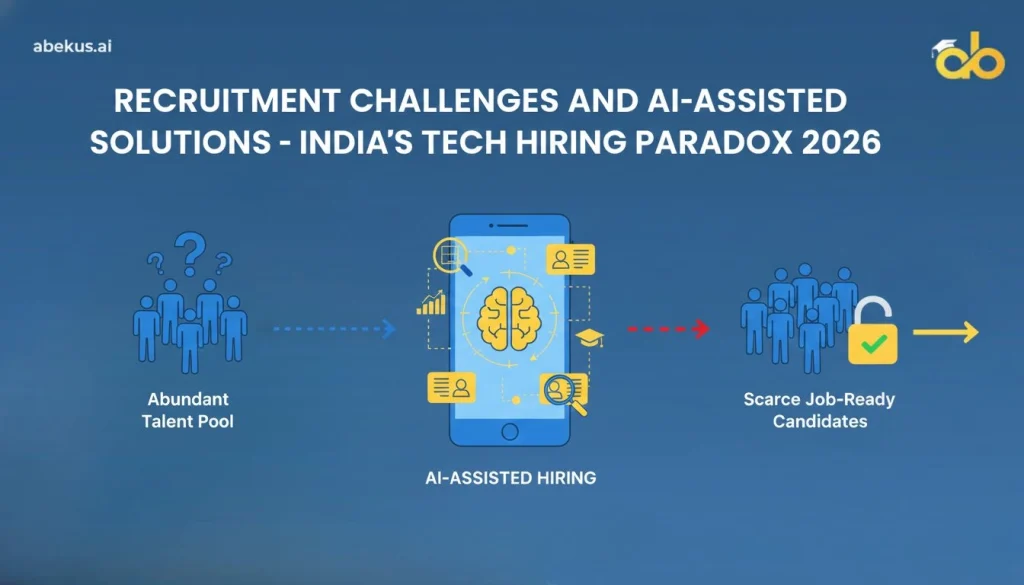
India is often hailed as the global hub of technology talent. Each year, the country produces nearly a million engineering and technology graduates. On paper, this looks like a recruiter’s dream: a massive talent pool ready to fuel the growth of India’s IT and digital economy. But scratch beneath the surface, and the reality is far more complex. According to multiple reports, only 42-55% of graduates are employable in tech-related roles. That means for every two graduates entering the job market, one is not equipped with the skills employers need. This is India’s tech paradox: plenty of graduates, but not enough employable talent. For businesses, especially those involved in tech hiring and recruitment, the paradox is costly. Hiring cycles are longer, training costs are higher, and critical roles in AI, cybersecurity, and cloud computing often remain vacant. In this blog, we’ll explore: Know more about AI – Hiring with Abekus.ai The Numbers Behind the Employability Gap India has no shortage of graduates. In fact, it produces more STEM graduates annually than the US and most European countries combined. Yet, quantity is not translating into quality. For recruiters, this mismatch means sifting through a sea of resumes only to find a handful of suitable candidates. The inefficiency drives up recruitment costs and slows down hiring processes, especially for fast-growing tech firms. Drivers of the Employability Gap 1. Outdated Curricula Most Indian universities are still teaching a syllabus designed for yesterday’s jobs. While global industries are moving toward AI, data science, blockchain, and cloud-native development, students are often taught outdated programming languages and legacy systems. 2. Lack of Practical Exposure Graduates may know the definitions of machine learning, but ask them to build a real-world model, and many stumble. Internships, labs, and project-based learning are limited, leaving students strong on theory but weak on application. 3. Soft Skill Deficiencies Recruiters often highlight soft skills as a bigger gap than technical skills. Communication, collaboration, leadership, and adaptability are non-negotiable in modern tech hiring, but less than half of graduates score adequately in these areas. 4. Regional & Tier Disparities A graduate from Bengaluru or Delhi might have access to better mentors, internships, and exposure than one from a tier-3 college in rural India. These disparities create pockets of high employability surrounded by deserts of underprepared talent. 5. Rapid Tech Evolution By the time curricula are updated, industries have already moved on. Skills in generative AI, cybersecurity, DevOps, and cloud computing are in high demand, but education systems can’t adapt quickly enough. The Cost to Businesses The employability gap isn’t just a graduate problem,it’s a business problem. In short, the employability gap translates into missed opportunities and reduced competitiveness. How AI-Assisted Recruitment Can Bridge the Gap Here’s where AI-assisted recruitment tools like Abekus.ai come into play. Instead of relying on degrees or resumes that don’t reveal actual capabilities, AI recruitment platforms analyze skills, predict job fit, and streamline hiring decisions. Benefits of AI in Recruitment: The Shift Toward Skills-Based Hiring A major trend in 2026 is the move from degree-based hiring to skills-based hiring. For recruiters, this means opening up wider, more diverse talent pools while reducing the risk of hiring underprepared candidates. Case in Point: A Recruitment Success Story Consider a mid-sized IT firm in Pune struggling to fill cloud engineering roles. Despite receiving thousands of applications, only a handful passed manual resume screening. After adopting an AI recruitment platform: This is the power of AI-assisted recruitment,it turns hiring from a gamble into a data-driven science. Solutions and Roadmap for 2026-2030 To truly solve India’s tech paradox, multiple stakeholders need to act: Conclusion: From Paradox to Opportunity India doesn’t have a talent shortage,it has an employability shortage. The paradox of plenty will persist unless companies rethink how they approach hiring. The future belongs to organizations that embrace AI-assisted recruitment to bridge the skills gap, reduce hiring inefficiencies, and tap into India’s massive potential talent pool. At Abekus.ai, we believe recruitment should be faster, fairer, and smarter. By combining AI with human judgment, businesses can turn India’s talent paradox into an opportunity,building a workforce that is not only employable but also future-ready.