
The resume is dying. Not slowly. Fast.
More companies are skipping the traditional interview circus and going straight to what matters: can you actually do the work? Skill-based hiring through competitions is not some future trend. It is happening right now, and it is changing who gets hired and how fast they get there.
This is not about replacing interviews entirely. It is about finding people who can prove their skills before anyone wastes time on a phone screen. Here is how it works and why companies from startups to enterprises are making the switch.
Traditional Hiring
Let us be honest. The old way of hiring is broken.
You post a job. You get 300 applications. Someone in HR spends three days filtering resumes based on keywords and college names. Then you interview ten people who look good on paper. Half of them cannot do the actual work. The one you hire quits in six months because the job was not what they expected.
The problems with resume-based hiring:
Too much noise. Applications flood in from people who are not even close to qualified. Sorting through them is exhausting.
Credentials lie. A degree from a top school does not mean someone knows their stuff. Five years of experience does not mean they learned anything useful.
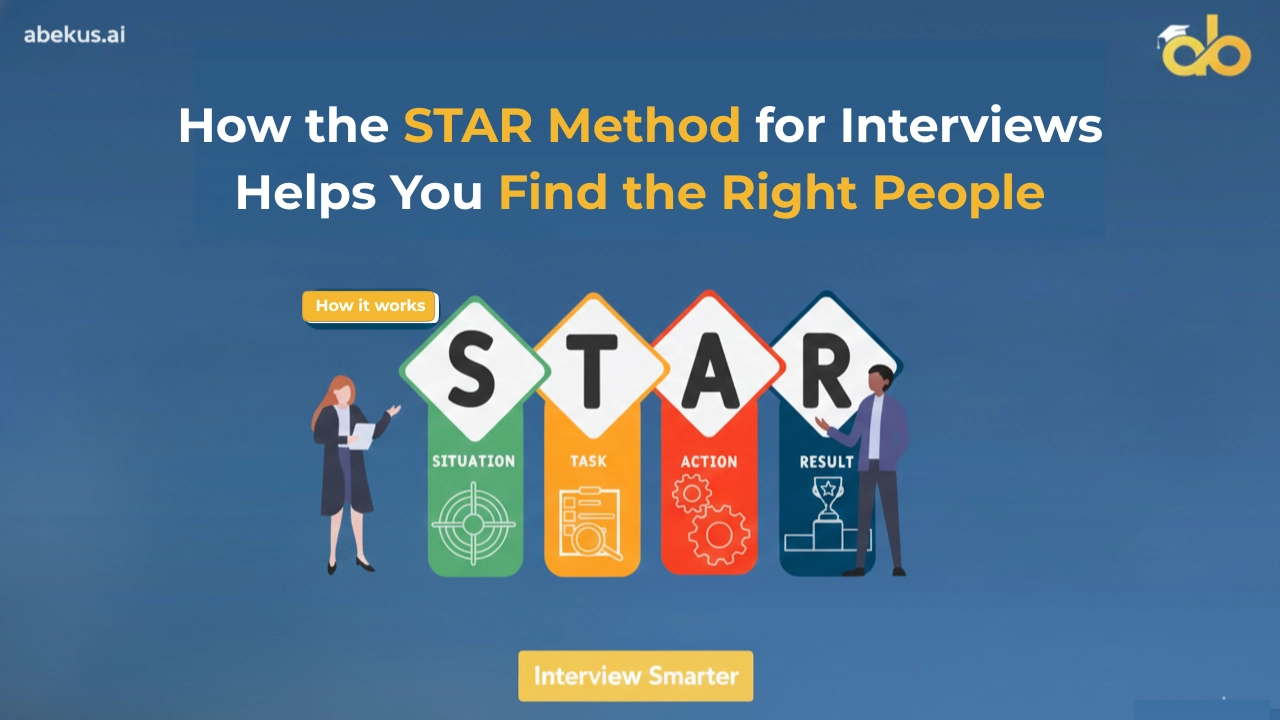
Interviews are theater. People practice answers. They memorize STAR method responses. You learn who interviews well, not who works well.
Bias creeps in everywhere. Unconscious preferences for certain schools, backgrounds, or even names skew decisions before anyone looks at actual ability.
It takes forever. Weeks to screen. Weeks to interview. Weeks to decide. Meanwhile, good candidates accept other offers.
Companies are tired of this. Candidates are tired of this. Everyone knows there is a better way.
Enter Skill-Based Hiring Competitions
Skill competitions flip the script. Instead of asking “Where did you work?” they ask “What do you actually know?”
Here is how it works: Candidates participate in domain-specific challenges on platforms like Abekus Competitions. They answer questions that test real knowledge in their field: data analytics, software development, finance, accounting, logical reasoning. The platform ranks everyone based on performance.
Companies browse top performers and reach out directly to the ones who match what they need. No resume screening. No wondering if someone is exaggerating their skills. Just results.
What makes this different from traditional assessments?
It is competitive. Thousands participate. Rankings show who truly stands out, not just who meets a minimum bar.
It tests real knowledge. Questions cover what you actually need to know on the job, not trivia or theoretical concepts nobody uses.
It is objective. Everyone gets the same questions. Performance determines ranking, not connections or how good your resume looks.
It is efficient. Candidates take one assessment. Companies see results from thousands of people at once. No scheduling chaos.
Why This Works Better Than Interviews
Competitions solve problems that interviews cannot.
You See Real Knowledge, Not Interview Skills
Some people are great at interviews. They are charming. They know what to say. They nail the behavioral questions. Then they start working and struggle with basic tasks.
Competitions expose this immediately. You cannot fake your way through 60 questions on data visualization or logical reasoning. Either you know it or you do not.
The Best People Actually Participate
Traditional job applications require updating resumes, writing cover letters, and jumping through hoops. Many talented people do not bother because it feels like a waste of time.
Competitions are different. They are quick. They let people showcase knowledge they are proud of. Developers who would never apply to your job posting will compete just to test themselves and see where they rank.
Then you get to hire them.
Bias Gets Eliminated (Mostly)
You do not see names, ages, schools, or backgrounds when you look at competition results. You see scores. Performance. Knowledge demonstrated.
The ranking is objective. The best performers rise to the top based on merit, not connections or resume polish.
This does not eliminate all bias, but it removes most of the unconscious filtering that happens in traditional hiring.
Speed Beats Everything
Traditional hiring timelines are absurd. Post job. Wait for applications. Screen resumes. Schedule phone screens. Conduct first interviews. Bring people onsite. Make decision. Send offer. Wait for acceptance.
That is 6 to 8 weeks minimum. Often 12 weeks.
With competition-based hiring, you browse leaderboards on Monday. You reach out to top performers by Tuesday. You interview the interested ones by Thursday. Offers go out by Friday. Total time: one week.
Speed matters. Good candidates do not stay on the market long. The faster you move, the better your odds of landing them.
How to Use Competition Results for Hiring
Not every company knows how to leverage skill competitions effectively. Here is how to do it right.
1. Look for Consistency, Not Just Single Wins
Anyone can get lucky once. Look for people who consistently perform well across multiple competitions in the same domain.
Someone who ranks in the top 10% across five data science challenges probably knows their stuff. Someone who won once but never placed again might have gotten lucky.
2. Match Competition Topics to Your Needs
If you are hiring a data analyst, look at data analytics and data visualization competitions. If you are hiring developers, focus on software development and logical reasoning challenges.
The closer the competition topic matches your job requirements, the more predictive the results.
3. Check Recent Activity
Skills degrade if not used. Someone who dominated competitions three years ago but has not participated since might be rusty.
Look for recent activity. People who compete regularly are keeping their skills sharp.
4. Combine with Brief Interviews
Competition results tell you someone knows their field. They do not tell you if someone will fit your culture, communicate well, or collaborate effectively.
Use competition performance to get great candidates in the door faster. Then do a focused interview to assess fit and communication.
5. Reach Out Quickly
Top performers get noticed by multiple companies. If you see someone impressive on a leaderboard, reach out immediately.
The longer you wait, the more likely someone else hires them first.
The Downsides (Because Nothing Is Perfect)
Skill competitions are not a magic solution. They have limitations.
Not Every Role Fits This Model
Competitions work great for roles where knowledge is measurable: software development, data analytics, finance, accounting, logical reasoning, technical domains.
They work less well for roles that depend heavily on soft skills, relationships, or organizational knowledge: sales, customer success, executive leadership.
For those roles, you still need traditional interviews. But even there, assessments can supplement your process.
Some Great Candidates Will Not Participate
Not everyone discovers competition platforms. Not everyone has time to participate regularly. You might miss qualified people who just never competed.
You need other hiring channels too. Competitions should not be your only source.
You Still Need to Interview
Competitions tell you if someone knows their field. They do not tell you if someone will show up on time, communicate clearly, or work well with others.
Use competitions to identify qualified candidates faster. Then interview to assess everything else.
Performance Anxiety Is Real
Some people know their stuff but freeze under competition pressure. They might score lower than their actual ability.
Do not treat competition scores as absolute truth. Use them as strong signals, not final verdicts.
Tools and Platforms Making This Easy
You do not need to build competition infrastructure yourself.
Abekus Competitions hosts regular challenges across 45+ skill categories including data analytics, software development, finance, accounting, quantitative aptitude, and logical reasoning.
Candidates participate and get ranked. Companies browse leaderboards and reach out to top performers. The platform handles all the logistics: hosting challenges, tracking performance, maintaining rankings, verifying results.
The focus is simple: connect skilled people with companies that need them. No resume gatekeeping. No credential filtering. Just performance.
What Happens Next in Hiring
Traditional hiring is not going away overnight. But it is shrinking.
More companies will adopt skills-first approaches. More candidates will demand them. The ones who figure this out early will hire faster, hire better, and build stronger teams.
Competitions are one piece of this shift. Paired with other skills-based methods like portfolio reviews and work simulations, they form a hiring system that actually works.
The companies doing this now are not just filling roles. They are finding people who know their stuff, verifying it through objective assessment, and building teams that perform from day one.
If you are still relying on resumes and interviews alone, you are competing with one hand tied behind your back.
Ready to Hire Through Skill Competitions?
Whether you are a company looking to find better talent faster or a candidate tired of resume black holes, skill competitions offer a better way forward.
For Companies: Browse top performers on Abekus and start connecting with proven talent in your field.
For Candidates: Explore active competitions and show what you know. Your next job might not require a resume at all.
Frequently Asked Questions
How do companies use skill competitions for hiring?
Companies browse leaderboards from skill-based competitions to identify top performers in relevant domains. Instead of screening hundreds of resumes, they look at objective rankings based on actual knowledge tests.
They reach out directly to candidates who performed well in competitions related to their hiring needs. This approach tests actual ability instead of credentials, making hiring faster and more accurate.
What types of roles can be filled through skill competitions?
Skill competitions work best for roles where knowledge is measurable and testable through multiple-choice assessments: software developers, data scientists, data analysts, business analysts, financial analysts, accountants, quantitative analysts, and roles requiring strong logical reasoning.
Are skill-based hiring competitions fair to all candidates?
Competitions eliminate many common biases. Evaluators do not see names, ages, educational backgrounds, or previous employers when reviewing performance. Rankings are based purely on knowledge demonstrated through standardized questions.
However, they are not perfectly fair. People familiar with the competition format may have advantages. Those with test anxiety might underperform relative to their actual knowledge. Companies should use competitions alongside other methods to ensure fair evaluation.
What is the success rate of hiring from competitions?
Companies using competition-based hiring report significantly better outcomes than traditional hiring:
Time-to-hire: 50 to 70% faster on average Quality of hire: Higher performance ratings in first-year reviews Retention: 20 to 30% better first-year retention rates Cost per hire: Lower due to reduced screening and interview time
These numbers vary based on role, industry, and how well companies match competition topics to job requirements. But the trend is consistent: skills-first hiring through competitions produces better results than resume-first hiring.
Can remote candidates participate in skill competitions?
Yes. All skill competitions are fully remote and can be taken from anywhere with internet access. Participants complete assessments on their own schedule within the competition window.
This expands the talent pool significantly. Companies can hire globally instead of limiting themselves to local candidates. Remote-first hiring through competitions has become standard practice for tech and analytical roles.