Interviews used to be simple conversations. Now they carry the weight of entire hiring decisions. Every question matters. Every answer gets analyzed.
The problem? Most candidates sound impressive until you actually hire them. They know what to say. They have practiced their lines. But can they do the work when things get messy?
That is where the STAR method for interviews changes everything. Companies like Amazon built their hiring around it because it works. It cuts through the polished answers and shows you how someone actually handles pressure, solves problems, and delivers results.
Here is what makes it different and why your team should be using it.
What Is the STAR Method for Interviews?
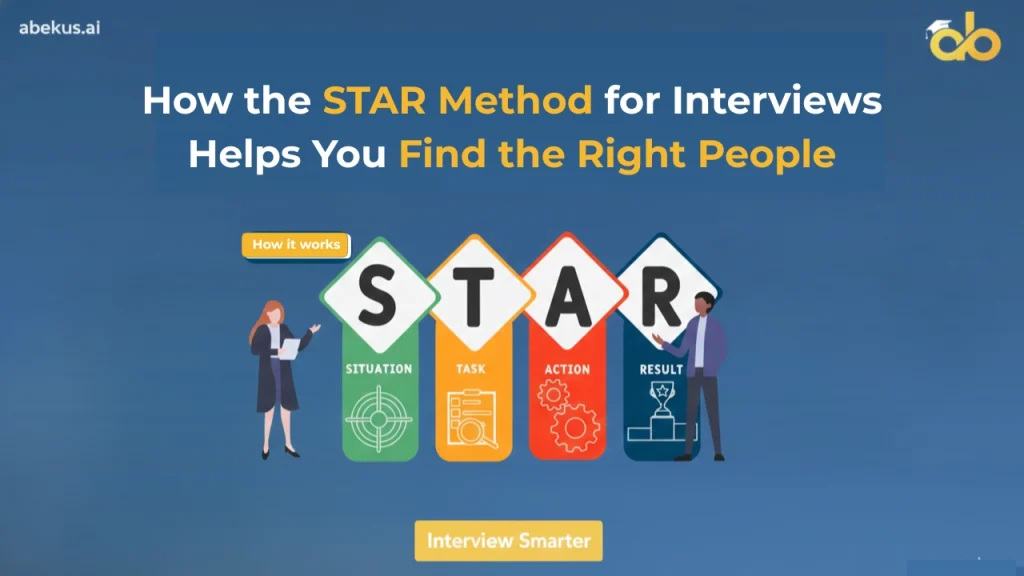
The STAR method for interviews is not complicated. It is just structured. Instead of letting candidates ramble or give you the same rehearsed stories, you ask them to break down real experiences using four parts:
S = Situation – What was happening? Give me the context.
T = Task – What were you responsible for? What needed to get done?
A = Action – What did you actually do? Not what the team did. What YOU did.
R = Result – How did it turn out? Numbers help here.
This structure forces people to be specific. You are not hearing vague claims like “I work well under pressure.” You are hearing “When our product launch got moved up by two weeks, I reorganized the sprint, cut three non-essential features, and we shipped on time with zero bugs in production.”
See the difference? One sounds like everyone. The other shows you exactly how this person thinks and works.
Why Hiring Teams Are Switching to the STAR Method
Unstructured interviews are a gamble. You end up hiring the person who interviews well, not the person who does the work well. We have all made that mistake.
Someone walks in, tells a good story, makes you laugh, and suddenly you are convinced they are perfect. Then three months later, you are wondering what happened.
The STAR method for interviewing removes that risk. According to a study by DDI, companies using behavioral interviewing techniques like STAR saw a 25% increase in hiring accuracy. Even better, they experienced up to 40% lower turnover in the first year.
Think about what that means. Fewer bad hires. Less time wasted on re-recruiting. Teams that actually stick around and deliver.
Those numbers are not abstract. They represent real consequences when you get hiring wrong: burned budgets, frustrated managers, projects that fall apart, and the exhausting cycle of hiring the same role twice in six months.
Why the STAR Method for Interviewing Actually Works
The STAR method for answering interview questions is built on behavioral consistency. Fancy term for a simple idea: how someone acted in the past tells you how they will act in the future.
When you ask someone to describe a real situation, you strip away the fluff. You are not hearing “I am great at teamwork.” You are hearing “In my last role, I worked with a cross-functional team of eight people to rebuild our onboarding process. I handled the technical side while coordinating with design and support. We cut onboarding time from five days to two, and new user activation jumped 30%.”
That answer tells you everything. You see their role. You see their impact. You can compare it to other candidates fairly.
Here is what the STAR method for interviews gives you that regular questions do not:
Context and depth. You understand the full story, not just the highlight reel.
Measurable outcomes. You see actual results, not just effort.
Fair comparison. Every candidate answers using the same structure, so you can evaluate them equally.
Bias reduction. You are judging actions and results, not personality or polish.
This is why companies using the STAR method for interview questions hire better. They are evaluating the right things.
How to Use the STAR Method for Interview Questions
You do not need special training to use this method. But you do need to prepare. Here is how to do it right.
1. Write Better Questions
Start every behavioral question with one of these prompts:
“Tell me about a time when…” “Describe a situation where you had to…” “Give me an example of…”
Do not ask yes-or-no questions. Do not ask what they “would do” in some hypothetical scenario. You want real stories about things that actually happened.
Good STAR interview questions:
Tell me about a time you missed a deadline. What happened?
Describe a situation where you had to deal with a difficult coworker.
Give me an example of a project you led that did not go as planned.
Walk me through a time you had to learn something new quickly.
These questions force candidates to dig into real experiences, not hypotheticals.
2. Listen for All Four Parts
Not every candidate knows the STAR structure. Some will skip parts. Your job is to catch that.
If someone describes the situation but skips straight to the result, ask:
“What was your specific role in fixing that?”
“What actions did YOU take, not the team?”
“What was different about your approach?”
These follow-ups separate the people who actually did the work from the people who were just in the room when it happened.
3. Match Questions to the Role
Before the interview, decide what matters most for this job. Problem-solving? Communication? Leadership? Conflict resolution?
Then design your STAR questions around those qualities. If you are hiring for customer service, ask about handling angry customers. If you are hiring for engineering, ask about debugging complex issues under tight deadlines.
Every question should map to a skill or behavior the role requires.
4. Push for Numbers
Vague answers like “I improved efficiency” do not tell you much. Ask follow-ups:
“How much time did that save?”
“What was the measurable outcome?”
“Did your manager or client give feedback on it?”
Quantified results help you separate strong performers from people who just show up and do average work.
Real STAR Method Examples from Actual Interviews
Here is what strong STAR responses look like in practice.
Example 1: Handling a Tight Deadline
Situation: Our product launch was three weeks behind schedule, and the executive team was threatening to pull the plug.
Task: I was responsible for getting the project back on track without cutting major features.
Action: I set up daily stand-ups to catch blockers early, reprioritized the backlog with input from stakeholders, and reassigned two developers to focus on the critical path items.
Result: We delivered on time with all core features intact. Post-launch surveys showed a 20% increase in user satisfaction compared to our previous release.
This answer gives you everything. You see the pressure, the responsibility, the specific actions, and the measurable outcome.
Example 2: Saving a Client Relationship
Situation: A major client was about to cancel their contract because we had a two-week backlog of unresolved support tickets.
Task: My job was to fix the backlog and rebuild trust before they walked.
Action: I implemented a triage system to prioritize critical issues, retrained the support team on response protocols, and personally called the client daily with updates.
Result: We cleared 80% of the backlog in ten days, and the client not only stayed but signed a contract extension worth $250,000.
Again, specific situation, clear actions, measurable results. That is what the STAR method for interviews is designed to uncover.
What Most People Get Wrong About the STAR Method
A lot of hiring managers think the STAR method is only for senior roles or leadership positions. Wrong. It works for every level.
Interns, junior employees, frontline workers, they all have examples of handling challenges, working with others, or solving problems. You just have to ask the right way.
Amazon is famous for using the Amazon STAR method for behavioral interviews across every role in the company. From warehouse staff to VPs, everyone gets evaluated using behavioral questions tied to their leadership principles. That consistency is a big part of why their hiring works at scale.
Another mistake? Not preparing candidates. If you spring the STAR format on someone who has never heard of it, they might stumble even if they have great experience. Some companies now share a quick STAR primer with candidates before the interview. It levels the playing field and makes the conversation more productive.
Why This Matters More Than Ever
Hiring is harder now than it has been in years. Everyone is competing for the same talent. Candidates have options. If your interview process feels like guesswork, you are losing good people to companies that have their process dialed in.
The STAR method for interview conversations gives you structure without feeling robotic. It helps candidates show their best work while giving you the data you need to make smart decisions.
You hear how someone actually handled a tough situation, not just what they say they are capable of doing. And in a market where most HR leaders admit they struggle to find the right people, that clarity is everything.
Final Thoughts
When every hire impacts your team, your budget, and your ability to hit goals, you cannot afford to wing it. The STAR method for interviews gives you a proven, repeatable way to evaluate what actually matters: how people behave in real work situations.
It shows you who they are when the pressure is on, when the deadline is tight, and when things do not go according to plan. That is the information that predicts success, not how well someone sells themselves in a conversation.
If you are still hiring based on gut feel or generic interview questions, it is time to switch. Start using the STAR method for answering interview questions in your next round of interviews. The difference will show up in your retention numbers, your team performance, and your own sanity as a hiring manager.
Ready to hire smarter and faster? Abekus AI helps you screen, shortlist, and interview candidates using structured methods like STAR. Get better insights, make confident decisions, and build teams that actually deliver. Try Abekus now →d see the difference.
FAQs
1. What is the STAR method of interviewing?
The STAR method is a way of answering interview questions by sharing a real story. You explain the Situation, your Task, the Action you took, and the final Result. It helps keep answers clear and easy to follow.
2. What are some examples of STAR interview questions?
STAR questions start with things like:
- Tell me about a time you handled stress at work.
- Can you share a time you set a goal and reached it?
- Describe a moment when you went the extra mile to finish a task.
- Have you ever had to deal with conflict at work? What did you do?
These questions help interviewers understand how you act in real situations.
3. What are the 5 P’s of interviews?
The 5 P’s stand for Preparation, Practice, Presentation, Positivity, and Performance. Keeping these in mind can help you stay confident and well-organized in any interview.
4. Why do interviewers like using the STAR method?
Interviewers use STAR because it helps them hear real examples of how you’ve handled things in the past. It’s a great way to understand how you solve problems, work with others, or deal with challenges.
5. Can I use STAR for all interview questions?
STAR is best for behavioral questions, like when they ask you to describe something you’ve done before. It’s not always needed for technical or yes/no questions, but it’s great for showing how you work and think.