
On this page
If you are in the 2027 batch, the campus placement you are preparing for is not the one your seniors described. The advice they gave you was accurate for their year and is quietly out of date for yours, which is a worse problem than having no advice at all.
Three things changed at once. Employers are putting more money into campus hiring, they are screening with AI before a human sees you, and the companies that used to hire the most people are hiring meaningfully fewer of them. Those pull in different directions, and which one affects you depends on what you are aiming for.
What actually changed
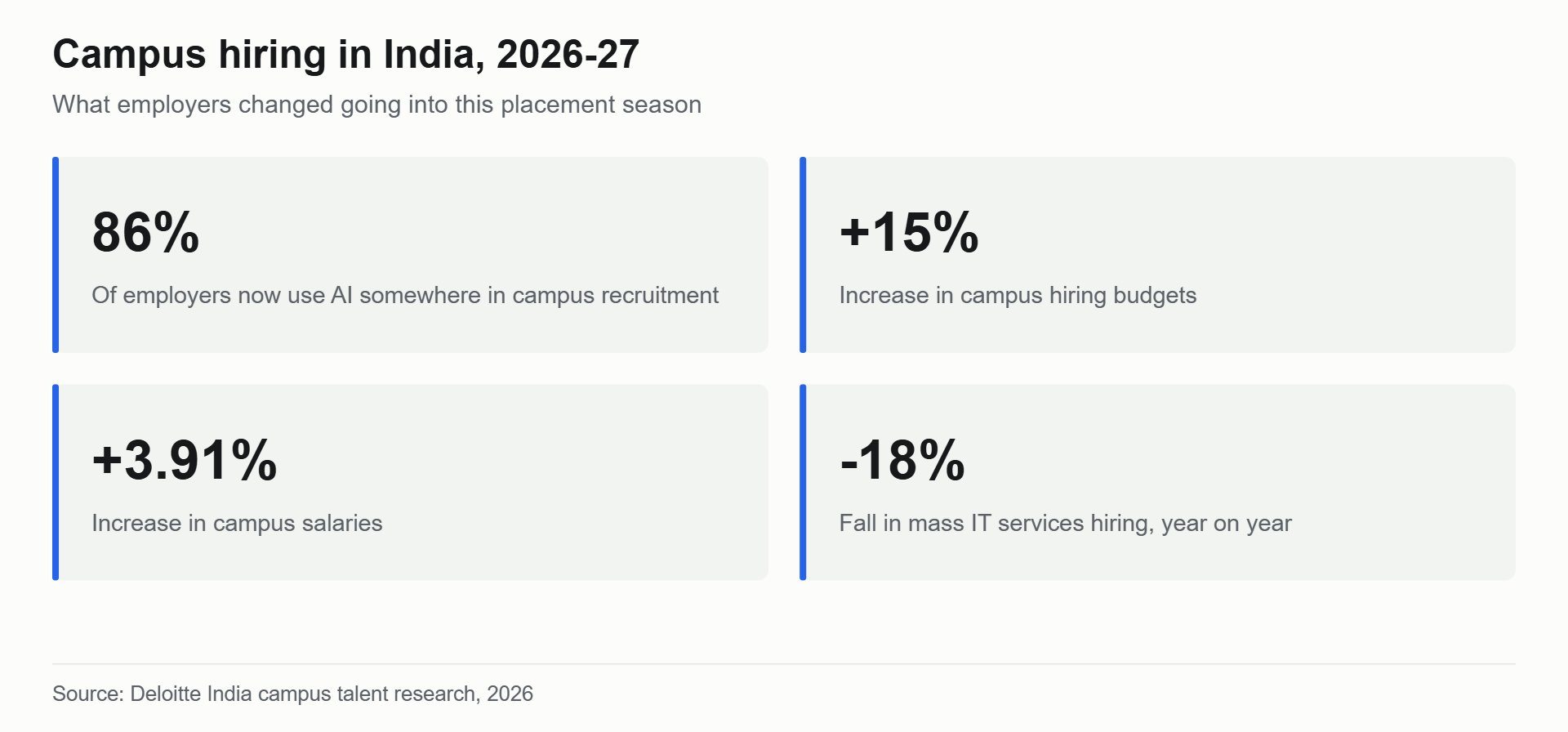
Deloitte India’s campus research puts the headline number at 86% — the share of employers now using AI somewhere in campus recruitment. Campus hiring budgets are up around 15% and campus salaries up about 3.91%.
Read alongside that: mass IT services recruiters have cut their absolute hiring by roughly 18% year on year. That single number explains most of the anxiety on campuses this season, because for two decades the services companies were the floor under the whole system. If you were not placed anywhere else, they took you. That floor has moved.
The money did not leave. It moved to fewer, more specific roles, and it is being spent through a filter that runs before a human is involved.
The first filter is now a machine
The practical consequence of 86% is that your first assessment is probably scored automatically. Not necessarily an AI interview — often a proctored test, a coding round, or a structured assessment whose results are ranked before anyone opens a resume.
This changes what preparation means. Under the old model, the test was a hurdle and the interview was the decision. Increasingly the test is the decision, and the interview confirms it. Time spent polishing how you present in a room, at the expense of clearing the assessment, is now spent in the wrong place.
It also means the assessment is predictable in a way interviews never were. The formats repeat, the topics are known, and past papers circulate. That is genuinely good news if you prepare specifically rather than generally.
Where the round is a recorded video or a chatbot rather than a test, the format itself costs people marks their ability would not — worth understanding how those rounds are scored before you sit one.
The model, side by side
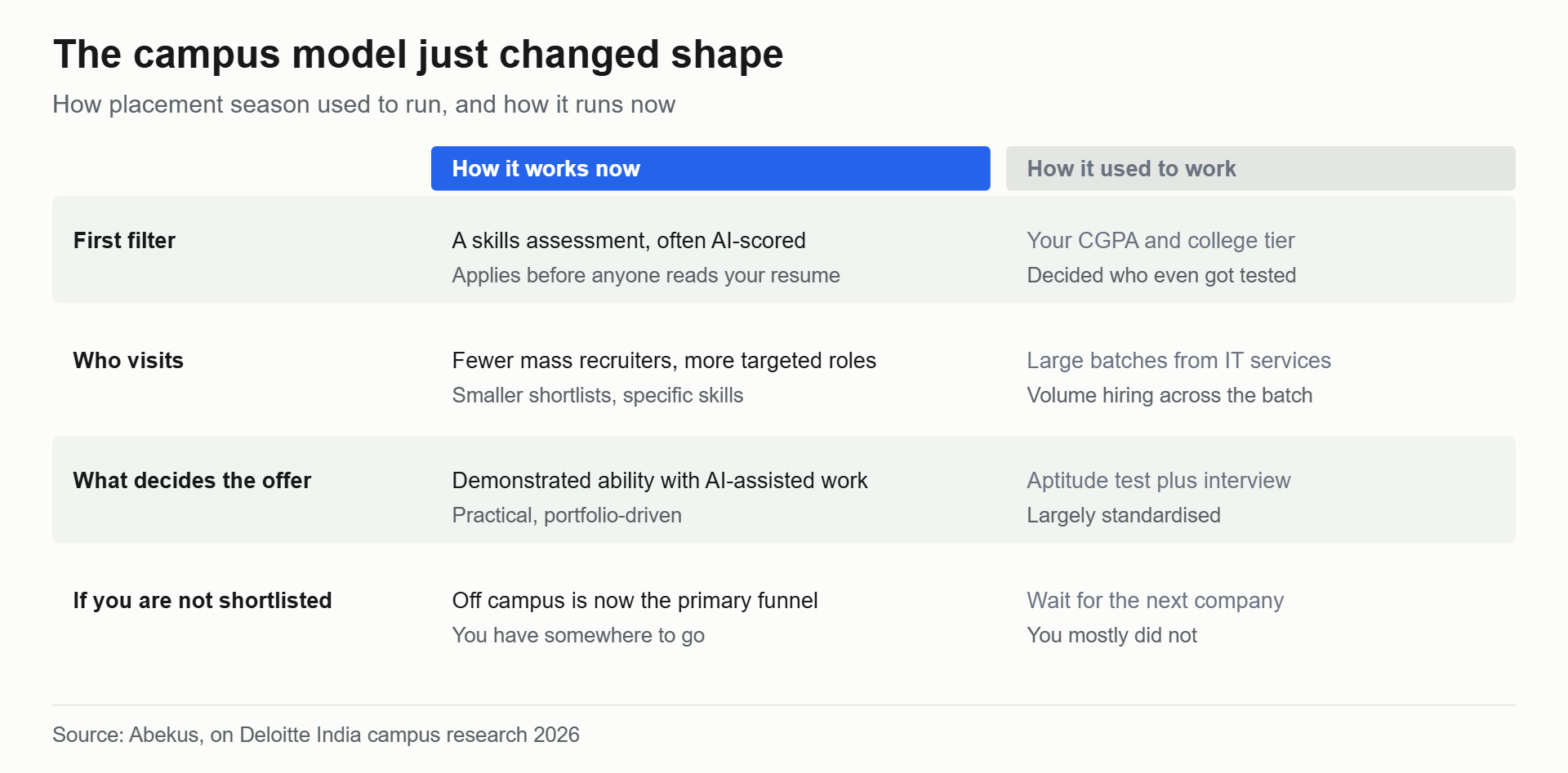
The row that matters most is the last one. Under the old model, not being shortlisted meant waiting for the next company to visit. There was nowhere else to go, so the whole batch’s strategy was to wait.
That is no longer true, and it is the single most useful thing to internalise this season. For students outside the top-ranked institutes, off-campus and portfolio-driven hiring is now the primary funnel rather than the backup — which is why the students who do best are running both processes in parallel from October rather than starting the second one in March.
What to do between now and your placement day
Find out the exact format of the assessments at your target companies. Ask seniors from last year, look at what your placement cell has, and find past papers. Two hours spent establishing the format is worth twenty spent preparing for the wrong one.
Prepare for the test specifically, not the subject generally. Revising all of data structures is a semester’s work. Preparing for the eleven patterns that actually appear is a fortnight’s. The second one clears the filter.
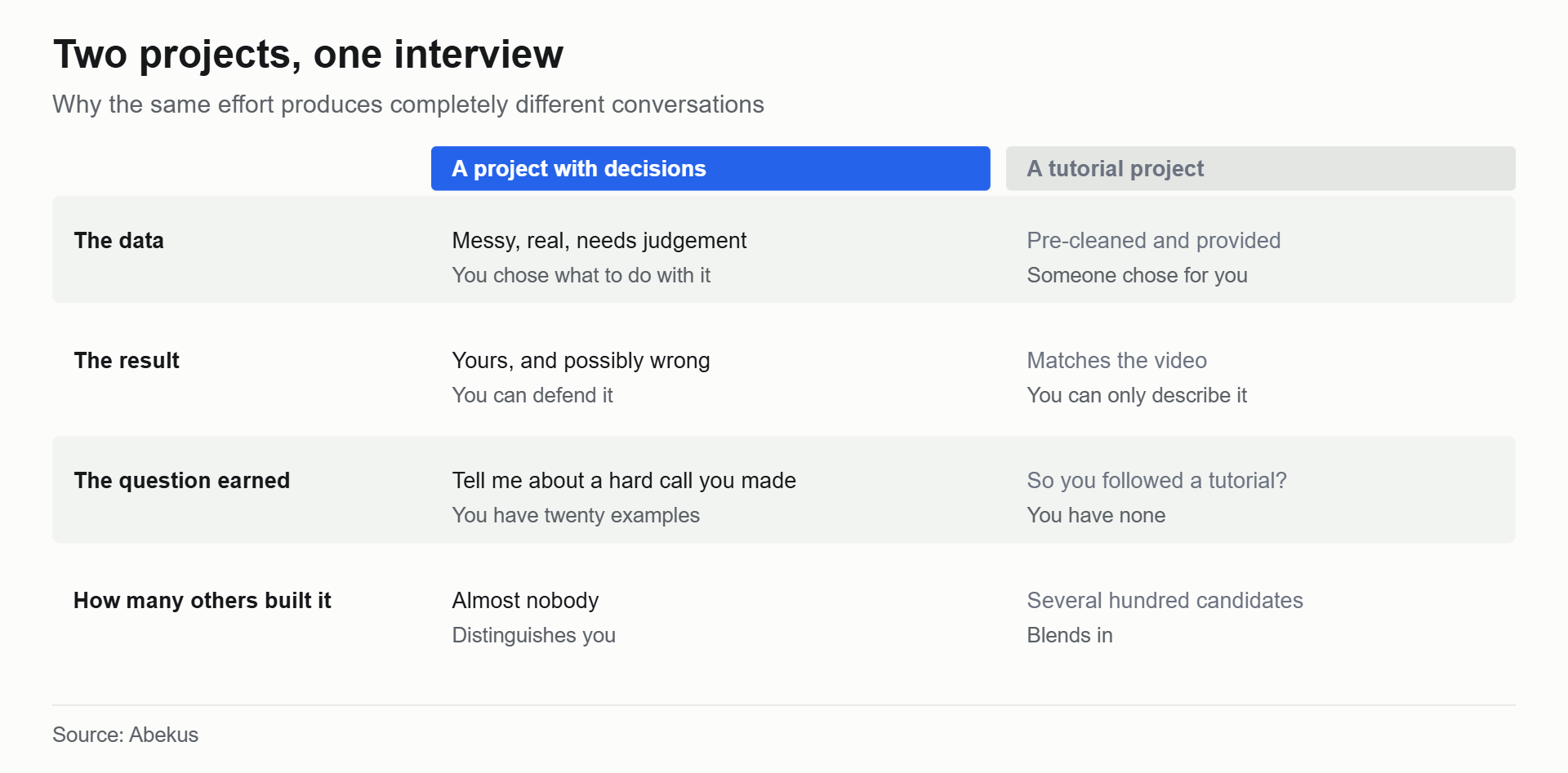
Have one project you can defend. When the interview happens it will go deep on something you built, and the conversation is the only part of the process that is genuinely yours. One project with a decision you can explain beats six you can list — the six weekend projects are chosen for exactly that.
Learn to work with AI tools, visibly. A large share of fresher roles now expect familiarity with AI-assisted workflows, and employers are screening for whether you can direct and check a tool rather than whether you have heard of one. Being able to say what you built with it, and where it was wrong, is the demonstration.
Start the off-campus process now, in parallel. Not in March when the campus season winds down. The roles you want have rolling intakes and the applications take weeks to convert. The off campus guide covers the sequence.
Do not aim only at the companies everybody names. Global Capability Centres are now the largest engine of white-collar hiring in India and mostly do not run traditional campus drives, which means half your batch is not even applying to them. That is an advantage available to you for free.
If the services companies were your plan
An 18% cut is significant but it is not a collapse, and these companies still hire in large numbers. What has changed is that the seats are more contested and more tiered.
The tiered entry tests matter more than ever, because the gap between the base band and the specialist tracks is large and is decided by one assessment. Preparing specifically for the higher track is the highest-return month a final-year student can spend, and it is a completely different exercise from general placement prep. The fresher salary guide explains how those bands actually work.
If you clear the base band and nothing else, that is a real job and a legitimate start. Take it, and treat the first year as the period in which you build the evidence to move — which is a considerably better position than being unplaced.
What not to worry about
Your CGPA, past a threshold. It still gates some shortlists, but past the cutoff it stops carrying weight quickly, and no amount of additional decimal places substitutes for clearing an assessment.
Your college’s tier, more than you can control. It affects which companies visit, which is real. It does not affect the off-campus funnel, which is now the larger one for most students.
The number of companies visiting your campus. One offer is one offer. A batch mate with four is not four times better placed than you.
The short version
The filter moved earlier and got automated, the money moved to fewer specific roles, and the traditional safety net shrank by about a fifth. Prepare for the specific assessment rather than the general subject, have one project you can genuinely defend, learn to direct AI tools rather than just name them, and run the off-campus process alongside the campus one starting now rather than in March.
The students who struggle this season are mostly not the least capable ones. They are the ones preparing for the version of placement season that ended a couple of years ago.
Frequently asked questions
What has changed in campus placement for the 2027 batch?
Three things at once: 86% of employers now use AI somewhere in campus recruitment, campus hiring budgets are up about 15%, and mass IT services recruiters have cut absolute hiring by roughly 18% year on year. More money, spent on fewer specific roles, filtered by machine first.
Do companies use AI to screen campus candidates?
Most now do in some form, according to Deloitte India research. It is often an automatically scored assessment or coding round rather than an AI interview, with results ranked before a human opens a resume. The test increasingly decides, and the interview confirms.
Is campus placement still worth relying on?
Only as one of two routes. For students outside the top-ranked institutes, off-campus and portfolio-driven hiring is now the primary funnel. The students who do best run both processes in parallel from October rather than starting the second one after campus season ends.
How should I prepare for placement assessments?
Specifically rather than generally. Establish the exact format used by your target companies through seniors, your placement cell and past papers, then prepare for the patterns that actually appear. Two hours identifying the format saves twenty preparing for the wrong one.
Are IT services companies still hiring freshers?
Yes, in large numbers, but roughly 18% fewer than last year and with more contested tiered entry. The gap between the base band and specialist tracks is large and decided by one assessment, so preparing specifically for the higher track is unusually high-return.
Sources
- Deloitte India, India’s campus talent landscape pivots to skill-based hiring as 86% of employers adopt AI in recruitment — AI adoption, hiring budgets, campus salaries. Accessed September 2026.
- Year-on-year change in mass IT services campus hiring is drawn from industry reporting on the 2026-27 season; treat as indicative of direction rather than a precise figure.